
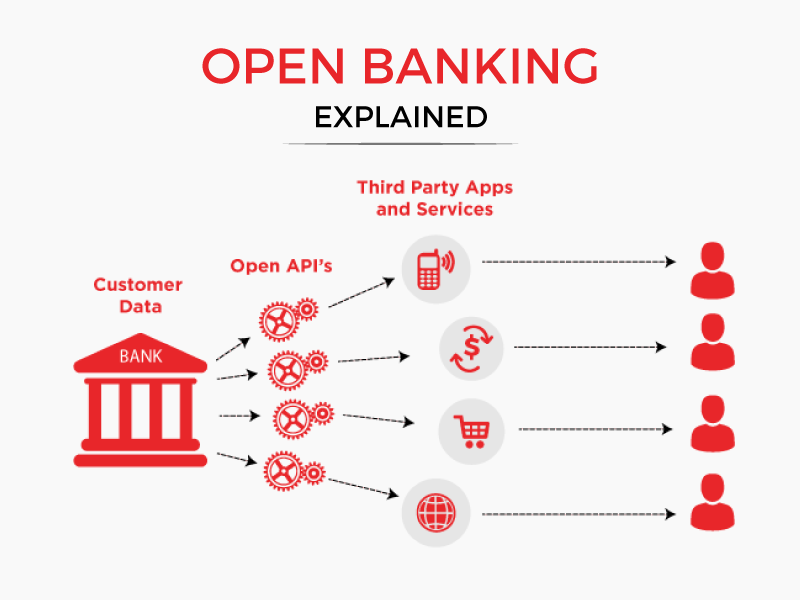
What is Open Banking?
In today’s fast-moving digital world, traditional banking Traditional Banking? is evolving rapidly. One of the biggest changes reshaping the financial landscape is Open Banking. But what exactly is it? And why should you care?
Open Banking is a system where banks and financial institutions allow third-party providers—like apps and fintech companies—to access your financial data securely and with your permission. This is done through Application Programming Interfaces APIs, like digital bridges connecting banks to these third-party services.

Whether you’re a curious consumer, a tech enthusiast, or a budding fintech entrepreneur, this beginner’s guide will walk you through the basics of open banking, what it is, how it works, and why it’s becoming a game-changer in personal finance.
Here’s a simplified step-by-step flow:
- User Consent: The customer, authorizes a third-party app to access your bank account data.
- Secure Connection: The app connects to your bank using secure APIs.
- Data Sharing: The app receives only the specific data you’ve approved like account balances or transaction history
- Enhanced Service: The app uses that data to offer personalized financial insights, better credit scoring, budget tracking, or instant payments.
This process is governed by strong data protection regulations, like PSD2 in Europe, ensuring privacy and security at every step.
Benefits of Open Banking
Open banking isn’t just a trend—it has real, tangible benefits for consumers, businesses, and the economy. It does the following:
- Empowers Consumers
Consumers gain greater control and visibility over their financial data, enabling better decision-making and more tailored services.
- Fuels Innovation
Fintech startups and banks can build smarter, more connected services — from budgeting apps to AI-powered investment tools.
- Improves Financial Inclusion
By giving alternative lenders access to financial data, open banking helps people with thin credit histories qualify for loans and services.
- Enhances Competition
With more players entering the market, banks are incentivized to innovate and improve their services, benefiting end-users.
Is Open Banking Safe?

Yes, when done right. Open banking is highly regulated in many countries, especially in places like the UK and the EU under PSD2 (Revised Payment Services Directive). In these regions:
- Only Licensed third-party providers can access your data.
- Data sharing only happens with your explicit consent.
- Banks and providers must use strong security protocols like encryption and multi-factor authentication.
Open banking is the bridge between traditional financial institutions and the agile, digital-first world.
For banks and financial institutions, embracing open banking is not just a Regulatory requirement — it’s a strategic opportunity.
Get Started with Open Banking
Ready to embrace open banking?
- Follow Open Banking Nigeria openbanking.ng for updates.
- Visit CBN’s website cbn.gov.ng for OBR resources. .
- Attend fintech conferences like Nigeria Fintech Week and WSO2Con 2025 to connect with innovators.
Open banking isn’t just a trend—it’s Nigeria’s path to a data-driven, inclusive financial future. Start exploring today!